
Recognizing Burnout in Special Needs Parents

I recently shared with special needs parents how burnout shows up in our lives, and how naming it is the first step to healing and finding strength again. This is a topic close to my heart, and something that I have struggled with as a parent myself.
Burnout happens when we spend more of our ‘resources’ than we are gaining. These resources are our time, our energy, our finances, our mental capacity or our spiritual life. Think about it as anything that drains you is spending your resources. Let’s be real this is the truth for most parents but it is exceptional prevalent for parents in my community.

I think the most important thing to realise is that it is not a question of ‘if’ it is a question of when. Whether it is late nights, broken sleep, the worry for your child in their day to day life or even the hypervigilance you have to slight changes in their moods. All of these things take a big toll on you. If we are not careful we can slowly but surely dip into burnout without realising what is happening. Catching burnout early helps us manage the symptoms better.
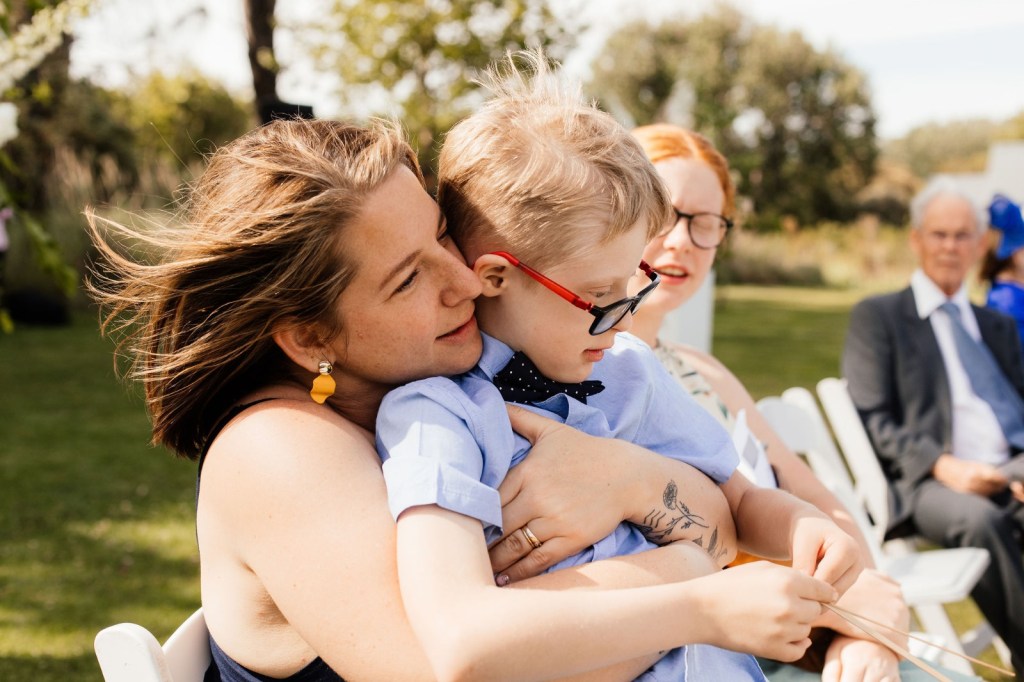
This is Ollie and I at a very special wedding. You wouldn’t know it by looking at this picture, but that was an incredibly difficult day and time for me. Ollie had a really tough day, he was struggling with the new environment being out of his routine and the new poeple around him. I needed to be able to hold space for him which can be really tiring when you are in the beginning stages of burnout

Here are 3 signs of burnout to watch out for in your life:

Emotional Exhaustion: No amount of rest, time off or sleep seems to touch sides for you.

The constant caregiving demands, medical appointments, therapies, and advocating can leave us feeling drained, overwhelmed, and unable to recover.

  • Examples in this context:
    • “I feel completely used up every day.”
    • “I often feel like I don’t have energy for myself.”

Depersonalization: this means you feel removed from yourself and your child’s needs. What has driven you or motivated you in the past now makes you feel a little numb.

  • This could show up as feeling distanced from your family and your children—feeling numb, detached, or guilty about being less present, sometimes resenting the constant demands.
  • Examples in this context:
    • “I sometimes feel I am just going through the motions.”
    • “I catch myself being short-tempered with my child or others.”

Reduced Personal Accomplishment: this means that where you used to feel a sense of achievement, celebration and joy is now replaced with a sense of distance, maybe even less care than before.

  • You may feel like nothing they do is enough, or that you are failing compared to other parents. Comparison often kills the joy, we know that with special needs children progress or reaching milestones can be slow or non-linear, it’s easy to discount the impact of yours and their hard work and efforts.
  • Examples in this context:
    • “I don’t feel effective as a parent.”
    • “No matter what I do, it doesn’t feel like enough.”

Ok so how do we cope with the burnout. For me there are a couple of important things to do. In this article I have focused on only a couple. If you are interested in more please reach out to me directly.

  1. Find a group or community that you can be vulnerable in, I mean authentically vulnerable. This could be friends, church, other special needs parents who just get it. It is not that they can change the environment; but they can just sit in it with you and love you through it.
  2. Find the support of people around you who can lighten the load: this could look like babysitting; helping you with a meal from time to time, finding the right school who love, challenge and support your child. It can look like not advocating 100% of the time (i.e. choosing your battles according to your capacity).
  3. Have some real conversations in your marriage about where you can support each other. Some important things to cover are: what mental and physical load can be shared; how are you really feeling; what capacity do you have right now; what you need and why it is important.
  4. Find out what restores your energy. In my support group it ranged from walks on the beach, time alone, going to the gym, connecting with your spouse. It can be anything you walk away from feeling rejuvenated and lighter. For me personally it is walking closely with Jesus, having time with my husband and working out a few times a week that gives me energy.
  5. Remember as hard as it is: comparison is the thief of joy. It robs you and replaces your joy with sadness. It changes the celebration to it should have been or it could have been. This, I think might be the toughest lesson to learn when our children are young. But it is the most powerful lesson to learn.

If you are interested in exploring this through coaching please reach out via the following link and book a session: https://sarahrogerslifecoachbooking.as.me/?appointmentType=13433225
Comfort or Courage

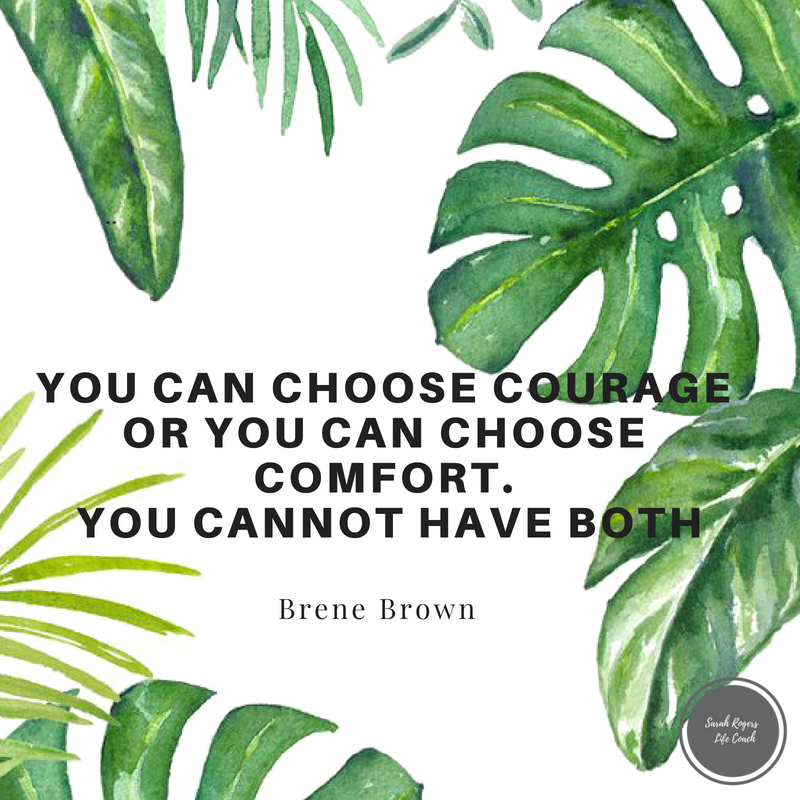
I just love this quote by Brene Brown.
courage or comfort
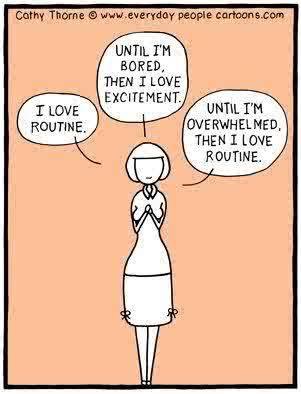
Comfort can be decoded as looking for certainty in your situation. That ability to be able to predict or anticipate what is going to happen next. This can look like routine and structure; basically it’s familiarity. The known. And there is safety in the known.
Courage is always needed during times of uncertainty. Courage; by definition is the ability to do something that frightens you. You can see why the two cannot coexist simultaneously. Comfort cannot cohabit a situation where there is fear; but courage can. In order for us to grow and learn; we need to be doing things that make us scared.
This quote is such a great reminder of two things for me:
1. We get to choose what we need: We are in control of that. And neither is right or wrong. There are times in your life where you get to choose whether or not you need to focus on comfort or whether you need to put yourself out into something a little more risky, new, different or challenging. 
2. There are consequences to our choices and we need to own that. So in times of comfort (and sometimes this can result in boredom) we need to know that we can change the circumstances and step out into something new and different. Conversely in times of discomfort, we can be sure that with the discomfort comes growth and the growth comes from the courage we have to muster to master the situation that we are in.
In order to live a full and healthy life we must be able to achieve seasons in both comfort and courage. It’s not healthy to dwell in either for too long.
IMG_6188

Assumptions

I have been reading “The Art of Possibility” by Benjamin Zander. What a great read; I highly recommend it. nikita-kachanovsky-494828-unsplash

It resonated with me so much; as often I hear my clients talking about the way  things should be; “I should be doing (insert task, job whatever here)!” These people who have the best intentions; often deny the pull towards something bigger, something more excited because of I should statements.

What if we started challenging these I should statements? What if we started listening to our hearts and started thinking about what is driving us instead of what is holding us back?

So often we think about what is wrong that we forget to focus on what is good, right and positive. What if we shifted our focus and our attention to what we want? Can you really answer that question – what do you want? Who do you want to be?

Benjamin Zander puts this brilliantly in his book (The Art of Possibility 2002) as:

What assumption am I making, that I’m not aware I’m making that gives me what I see?

And when you have an answer for that question ask yourself this one:

What might I now invent that I haven’t yet invented that would give me other choices?

This is so powerful because when asking these questions we no longer feel it necessary to live and love by “I should” statements but we now give ourselves the permission to dream and create a new life that we design, change and control.

What if you started with small steps towards your dream? Small steps are the start of a great adventure! Start by dreaming what life could look like for you? Take that dream and start planning how to achieve it; break it down into manageable tasks! Then go and do it! It might be scary, but it will be worth it!


Photo by Nikita Kachanovsky on Unsplash


Honour over Ego

I have been thinking and reading a lot lately about communication. Great communication forms the foundation of deep and meaningful relationships. It’s the language we use that determines how deep our relationships go. We decide how much of ourselves we allow other people to see. This is a particularly meaningful topic for me as my son, Ollie, has Down Syndrome and struggles to communicate verbally. So I can see first-hand how impactful meaningful communication can strengthen a relationship and how ineffective communication builds high levels of frustration and in some cases anxiety.

Good communication is honouring; it requires us to put our relationship before our ego. What that means is: if I prioritize our relationship over my ego then the way I talk with and to you and the language I use show my value for you and for our relationship. The words I use will often work towards building you and our relationship up. In conflict situations I don’t use language that is blaming or hurtful, but rather I bring the conflict into the light and use respectful and loving language with the goal of resolving the conflict while protecting our relationship.

The way we deal with conflict can either be destructive or constructive. It all boils down to what our desired outcome looks like; if all I am focused on is being right; and getting you to understand my point of view then my ability to listen and understand is dramatically reduced. Why? Because all I can focus on are the reasons why I am right and you are wrong, and my unconscious wont afford me the ability of understanding your side of the story. Without getting technical this is called confirmation bias; a self-fulfilling prophecy in some instances. But, what if my goal was to protect my relationship with you and to first try and understand your model of the world? The possibility of a more positive outcome is more likely now but my brain is wired to infinitely more possibility. This makes me more open and more likely to understand your point of view. I am more likely to use language that is neutral and / or positive and my frame of mind

Good communication requires a certain amount of vulnerability and definitely requires honesty. When we are vulnerable we allow others to see the real us. This can be so scary. In fact we go to a lot of trouble putting up barriers and defences so as not to show people who we really are. There is fear of people rejecting us, there is social pressure to be a certain way, and due to our herd mentality, we try out best to fit in.

Dr. Caroline Leaf says that we are biologically and neurologically wired to connect with people around us. Its vital to us that we are able build deep and intimate relationships; and we do this through learning how to be vulnerable and honest in our communication.

However, we often keep our thoughts and our emotions so close to our chests (for a variety of reasons) that the people closest to us don’t know what’s going on inside.  For many a sense of fear holds us back from good communication. The fear of rejection; the fear that our partner (whether in a personal relationship or a business partnership) will not respond in the same manner all provide walls and barriers for keeping our communication at a surface level. But my question to you is: how does that serve you? And what would amazing communication look like to you if fear did not hold you back?